


How to Adapt Writing Style for Different CIPD Levels
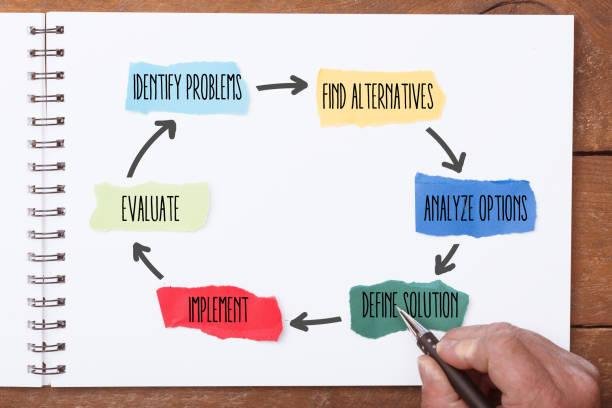
Adapting your writing style to meet the expectations of different Chartered Institute of Personnel and Development (CIPD) levels is essential for success in human resources and learning and development qualifications. Each CIPD level demands a different depth of analysis, tone, and structure. Whether you’re studying at Level 3, Level 5, or Level 7, understanding how to tailor your writing is key to achieving strong results in your assessments.
This guide explores how writing expectations evolve across CIPD levels and how you can effectively adapt your approach to meet the standards of each.
Understanding the CIPD Levels
CIPD qualifications are structured to align with different professional stages, ranging from foundational to advanced levels. The writing style suitable for each level corresponds to the knowledge, analytical ability, and professional maturity expected of learners.
CIPD Level 3 – Foundation Level
At Level 3, your writing should demonstrate a fundamental understanding of human resources (HR) and learning and development (L&D) principles. The style should be clear, concise, and descriptive. Focus on explaining concepts rather than critiquing them.
For example, when discussing employee engagement, describe what it means, why it is important, and provide basic examples. Avoid overcomplicating your language; simplicity and accuracy are valued.
CIPD Level 5 – Intermediate Level
At Level 5, your writing should show critical awareness and analytical thinking. The tone should be more professional, and your arguments must be backed by credible sources such as HR journals, industry reports, and academic references.
Here, you move beyond describing what something is to explaining why and how it impacts the workplace. Comparisons between theories, evaluation of practices, and evidence based reasoning become crucial.
CIPD Level 7 – Advanced Level
Level 7 requires writing that reflects strategic insight and reflective evaluation. You should adopt an academic and authoritative tone, showcasing your ability to assess, synthesize, and apply complex HR concepts to real world challenges.
Your writing should flow logically, demonstrating coherence and depth. Use critical language such as “evaluate,” “justify,” “assess,” and “recommend.” At this stage, your arguments must demonstrate advanced critical thinking and practical implications for organizational strategy.
For learners seeking tailored guidance, professional 3CO04 Assessment Help can provide expert feedback and strategies for improving academic writing and analysis across levels.
Key Differences in Writing Style Across CIPD Levels
1. Tone and Language
The tone of your writing should evolve as you progress through the CIPD levels.
-
Level 3: Conversational yet professional. Use accessible language and short sentences.
-
Level 5: Balanced and formal. Integrate technical terms appropriately without overwhelming the reader.
-
Level 7: Academic and persuasive. Employ precise vocabulary and maintain an analytical tone.
Your language must align with the reader’s expectations at higher levels, this means adopting a tone that reflects expertise and confidence in HR or L&D topics.
2. Structure and Organization
Each CIPD level values clarity, but the complexity of structure increases as you advance.
-
Level 3: Use straightforward essay or report structures introduction, body, and conclusion.
-
Level 5: Include headings, subheadings, and sections for analysis, theory, and evaluation.
-
Level 7: Incorporate comprehensive structures that demonstrate synthesis of research, case studies, and reflective practice.
Clear organization not only improves readability but also showcases your ability to communicate ideas effectively an essential skill in HR and management writing.
3. Depth of Research and Evidence
As you move through CIPD levels, expectations for research depth grow significantly.
-
Level 3: Rely on course materials and basic HR frameworks.
-
Level 5: Integrate academic sources and cite relevant HR models such as Maslow’s Hierarchy of Needs or Herzberg’s Two Factor Theory.
-
Level 7: Engage with advanced literature, recent HR trends, and critical evaluations of management theories.
At higher levels, you’re expected to demonstrate independent thinking through evidence based analysis and critical synthesis.
4. Analytical and Critical Thinking
Critical thinking is the hallmark of strong CIPD writing.
-
Level 3: Demonstrate understanding by explaining ideas clearly.
-
Level 5: Analyze by comparing perspectives and discussing implications.
-
Level 7: Critically evaluate by assessing strengths, weaknesses, and potential outcomes of various HR approaches.
You can improve this skill by asking reflective questions: Why does this matter? What evidence supports it? How does it apply to practice?
Techniques to Adapt Your Writing Style
1. Identify Learning Outcomes
Every CIPD assessment includes learning outcomes that guide the writing approach. Begin by reading these outcomes carefully they reveal what assessors expect in terms of knowledge, analysis, and application.
For example:
-
“Describe” → requires explanation (Level 3)
-
“Evaluate” → requires analysis and justification (Level 5 and 7)
By aligning your writing style with these action verbs, you can ensure that your response meets the exact assessment criteria.
2. Use Reflective Practice
Reflective writing is vital at all CIPD levels but becomes more analytical at higher ones.
At Level 3, you might reflect on how you’ve applied an HR concept in your workplace. At Level 7, reflection should connect theory with complex professional experiences, considering the broader impact on organizational goals.
Frameworks such as Gibbs’ Reflective Cycle or Kolb’s Learning Cycle can help you structure reflective writing effectively.
3. Integrate Theories with Practice
Effective CIPD writing connects theory with real life HR scenarios. As you progress, your ability to link theoretical models to organizational practice should deepen.
At Level 5 and 7, go beyond merely mentioning theories discuss how they inform decision making, policy design, or leadership development. Use examples from your workplace or case studies to strengthen arguments and demonstrate applied understanding.
4. Edit for Clarity and Professionalism
No matter the level, editing plays a critical role in producing polished work. Review your writing for:
-
Grammar and spelling accuracy
-
Logical flow of ideas
-
Consistent formatting and citation style
-
Conciseness and readability
A well edited paper signals professionalism and attention to detail qualities valued by both CIPD assessors and employers.
Common Mistakes to Avoid
-
Using overly casual language: Avoid conversational phrases; aim for formality and precision.
-
Lack of evidence: Unsupported opinions weaken arguments always cite credible sources.
-
Ignoring assessment verbs: Misinterpreting “explain,” “analyze,” or “evaluate” leads to lower marks.
-
Overusing jargon: While HR terminology is important, excessive use can make writing dense and unclear.
-
Poor structure: Disorganized writing confuses assessors and reduces impact.
Avoiding these pitfalls ensures that your writing remains professional and meets CIPD’s rigorous academic standards.
Conclusion
Adapting your writing style for different CIPD levels is about more than just using academic language it’s about demonstrating growth in analytical thinking, professionalism, and practical application.
At Level 3, focus on clarity and understanding; at Level 5, emphasize critical analysis; and at Level 7, master strategic reflection and synthesis. As you progress, your writing should evolve to mirror your expanding expertise and confidence as an HR or L&D professional.
By recognizing the expectations of each level and refining your writing techniques accordingly, you can produce assessments that not only meet but exceed CIPD standards showcasing your readiness to excel in the dynamic world of people management and development.




 Arabic
 Français
 Español
 Português
 Deutsch
 Türkçe
 Dutch
Dutch
 Italiano
 Russian
 Romaian
 Portuguese (Brazil)
 Greek
Greek