In modern manufacturing, production efficiency depends on precision, repeatability, and speed. Even the smallest components can create major delays when they are not properly aligned or prepared for assembly. Fasteners such as screws, bolts, pins, rivets, and studs are essential in nearly every production environment, but bent, misaligned, or irregular fasteners can slow down workflows, damage equipment, and reduce product quality. This is where fastener straightening solutions play an important role. By correcting alignment issues before fasteners enter the assembly line, these systems help manufacturers maintain consistent output while improving overall productivity.
What Are Fastener Straightening Solutions?
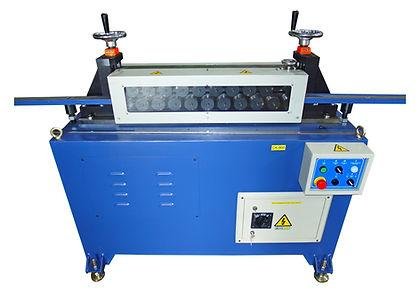
Fastener straightening solutions are specialized machines or automated systems designed to inspect, align, and straighten fasteners before they are used in production. They are commonly integrated into high-volume manufacturing environments where thousands of fasteners are processed daily. Instead of relying on manual sorting or correction, companies can automate the straightening process and ensure every fastener meets the required specifications.
Increasing Production Speed
One of the biggest benefits of fastener straightening solutions is increased production speed. In manual operations, workers must stop to inspect bent fasteners, remove defective parts, or correct alignment problems by hand. These interruptions may seem minor, but over time they create significant delays. In automated assembly lines, even one misaligned fastener can jam feeding systems or halt robotic tools. Straightening systems eliminate these disruptions by preparing fasteners in advance, allowing machinery to run continuously with fewer stoppages.
Speed improvements are especially valuable in industries such as automotive, aerospace, electronics, and appliance manufacturing. These sectors often depend on fast-paced assembly processes where every second matters. If operators must repeatedly deal with damaged or crooked fasteners, cycle times increase and productivity declines. By using straightening equipment, manufacturers reduce bottlenecks and keep production schedules on track.
Improving Consistency in Production
Another major advantage is consistency. Consistent fasteners lead to consistent assembly performance. When every screw or bolt has the correct shape, length, and alignment, fastening tools can operate with greater accuracy. This reduces the chances of cross-threading, poor torque application, incomplete seating, or loose connections. As a result, finished products meet quality standards more reliably.
Consistency also supports lean manufacturing principles. When production inputs are uniform, processes become more predictable. Supervisors can better estimate throughput rates, maintenance schedules, and labor needs. Variations caused by defective fasteners are minimized, making it easier to maintain stable operations.
Reducing Material Waste
Fastener straightening solutions also reduce material waste. Bent fasteners are often discarded, even when they could be corrected and reused. With proper straightening systems, many parts can be restored to usable condition rather than scrapped. This lowers raw material costs and supports sustainability goals by reducing waste sent to landfills.
Over time, the savings from recovered materials can be substantial, especially in high-volume manufacturing environments.
Enhancing Worker Productivity
Improved worker productivity is another important benefit. Repetitive inspection and correction tasks consume valuable labor hours that could be used for more skilled activities such as quality control, machine setup, or process optimization. By automating fastener straightening, employees can focus on higher-value responsibilities instead of spending time fixing minor component issues.
This not only improves efficiency but can also increase job satisfaction by reducing tedious manual work.
Advanced Technology and Automation
Modern fastener straightening systems often include advanced technologies such as sensors, machine vision, and automated feedback controls. These features allow real-time inspection of fastener shape, alignment, and dimensions. If irregularities are detected, the system can immediately correct them or remove defective parts from the production stream.
Smart monitoring also provides useful data for continuous improvement, helping manufacturers identify recurring supplier issues or process problems upstream.
Protecting Equipment and Reducing Downtime
Bent or malformed fasteners can damage feeders, chutes, threading tools, and robotic assembly heads. Frequent jams and collisions increase wear on machinery and lead to expensive repairs. Straightened fasteners move smoothly through automated systems, reducing mechanical stress and extending equipment life.
Lower maintenance needs contribute directly to faster and more reliable production.
Choosing the Right Solution
When selecting a fastener straightening solution, companies should consider production volume, fastener type, material hardness, and required tolerances. Some systems are designed for small precision screws, while others handle heavy-duty bolts or specialty components. Integration with existing automation lines is also important.
The best solution should improve workflow without creating unnecessary complexity.
Conclusion
Fastener straightening solutions are a practical way to increase both speed and consistency in production. By ensuring that every fastener enters the assembly process in proper condition, manufacturers can reduce downtime, improve product quality, protect equipment, and optimize labor resources. As production environments become more automated and performance-driven, reliable fastener preparation is no longer a minor detail—it is a key factor in operational success.





 Arabic
 Français
 Español
 Português
 Deutsch
 Türkçe
 Dutch
Dutch
 Italiano
 Russian
 Romaian
 Portuguese (Brazil)
 Greek
Greek