


Hospital Management Software: Why Growing Hospitals Need Connected Systems To Manage Doctors, Patients, And Operations Efficiently
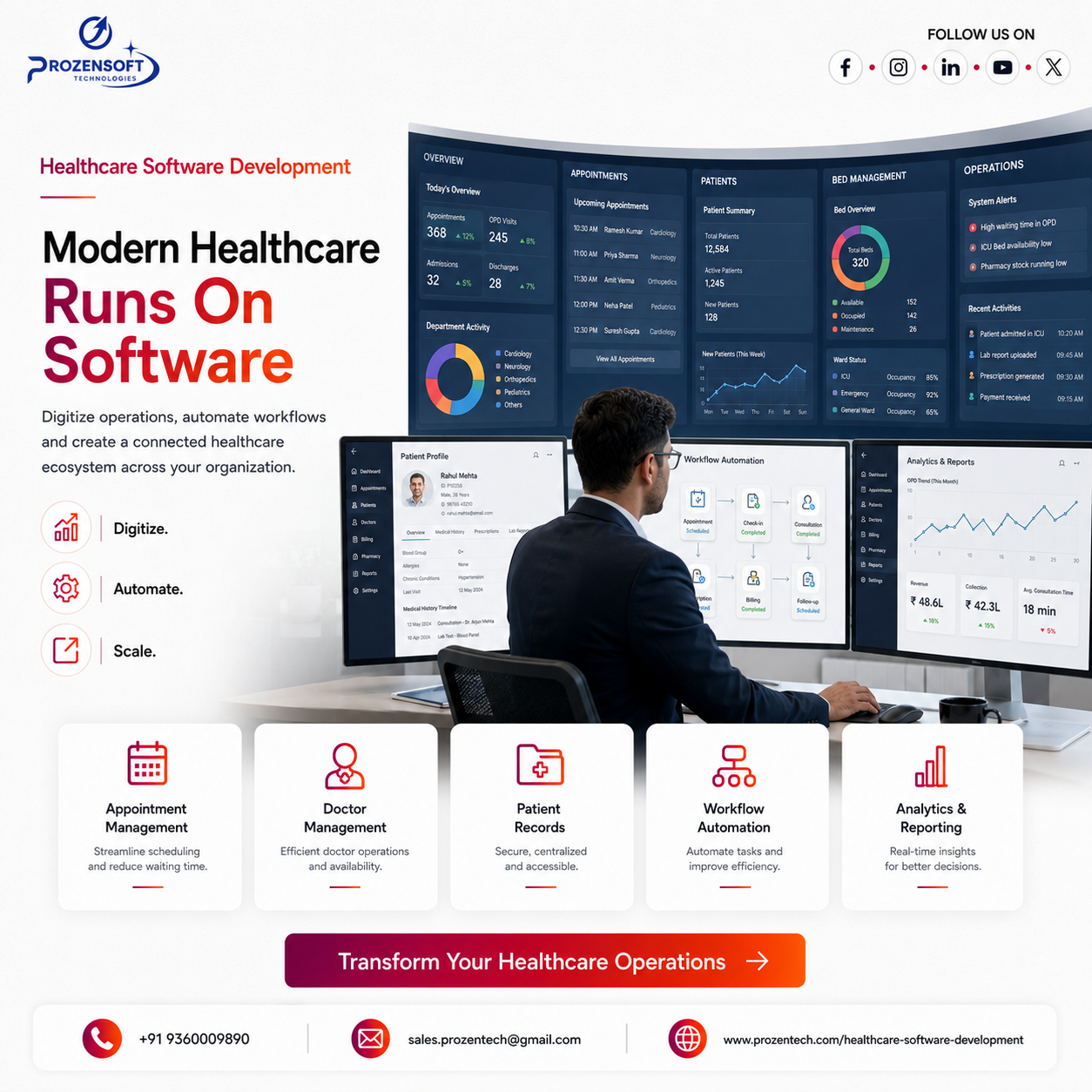
Modern hospitals are managing more patients, more doctors, more departments, and more healthcare services than ever before.
As hospitals expand, operational complexity grows rapidly.
Managing hundreds of doctors.
Tracking thousands of patient records.
Coordinating appointments.
Handling billing.
Managing laboratories.
Monitoring pharmacy operations.
Trying to manage all of this manually creates delays, inefficiencies, and unnecessary administrative challenges.
This is exactly why Hospital Management Software has become a critical investment for hospitals, healthcare groups, specialty centers, and multi-branch healthcare organizations.
The goal is no longer just managing hospital operations.
The goal is creating a connected healthcare ecosystem where doctors, patients, administrators, and departments work together seamlessly.
Why Hospitals Are Moving Away From Traditional Management Systems
Many hospitals still operate using disconnected systems.
Separate appointment tools.
Separate billing systems.
Separate patient records.
Separate doctor schedules.
As patient volume grows, these disconnected systems create operational bottlenecks.
Common challenges include:
- Appointment conflicts
- Doctor scheduling issues
- Delayed patient records
- Billing inefficiencies
- Communication gaps
Hospital Management Software solves these challenges by bringing everything together into one centralized platform.
Managing Large Numbers Of Doctors Becomes Easier
One of the biggest challenges for hospitals is doctor management.
As healthcare organizations grow, managing specialists across multiple departments becomes increasingly complex.
Hospitals often need to track:
- Doctor Availability
- Consultation Schedules
- Department Assignments
- Appointment Slots
- Leave Management
- Patient Allocations
Without a centralized system, coordination becomes difficult.
Hospital Management Software provides complete visibility into doctor operations, making it easier for administrators to manage healthcare professionals efficiently.
This helps improve resource utilization while reducing scheduling conflicts.
Appointment Management Without The Administrative Burden
Appointment scheduling plays a major role in hospital operations.
Manual scheduling often creates:
- Double bookings
- Long waiting times
- Missed appointments
- Patient dissatisfaction
A centralized hospital platform automates appointment management and allows patients to connect with available doctors more efficiently.
Benefits include:
- Faster Appointment Booking
- Better Doctor Utilization
- Reduced Waiting Times
- Improved Patient Experience
The result is smoother hospital operations and happier patients.
Patient Records Become Instantly Accessible
Healthcare decisions depend heavily on accurate patient information.
Paper-based records and disconnected databases often create delays.
Hospital Management Software centralizes:
- Patient Histories
- Consultation Records
- Prescriptions
- Diagnostic Reports
- Treatment Plans
Doctors can access patient information quickly, helping improve diagnosis and treatment decisions.
Faster access to information often leads to better healthcare outcomes.
Multi-Department Coordination Improves Efficiency
Hospitals consist of multiple interconnected departments.
These include:
- General Medicine
- Cardiology
- Neurology
- Orthopedics
- Radiology
- Laboratory Services
- Pharmacy
When departments operate independently, communication challenges often emerge.
Hospital Management Software creates a connected workflow that improves coordination between departments.
This reduces delays and improves service quality throughout the hospital.
Better Doctor Allocation Improves Patient Care
Managing specialists effectively is crucial for healthcare organizations.
Hospitals often struggle with:
- Overloaded Doctors
- Uneven Patient Distribution
- Scheduling Conflicts
A centralized management platform helps allocate patients more efficiently based on availability and specialization.
This ensures doctors spend more time providing care and less time dealing with administrative issues.
Hospital Billing And Financial Operations Become Simpler
Hospital operations involve multiple financial workflows.
Consultation charges.
Diagnostic services.
Pharmacy purchases.
Admission costs.
Insurance processing.
Managing these activities manually can create inaccuracies and delays.
Hospital Management Software helps streamline billing while improving financial visibility.
This creates a smoother experience for both patients and administrators.
Why Multi-Hospital Groups Need Centralized Management
Many healthcare organizations operate multiple facilities.
Hospitals.
Clinics.
Diagnostic centers.
Specialty branches.
Managing these locations independently creates operational challenges.
Hospital Management Software provides centralized visibility across all facilities.
Healthcare leaders can monitor:
- Doctor Performance
- Patient Volumes
- Revenue Trends
- Operational Metrics
- Resource Utilization
This supports more informed decision-making and efficient growth.
Real-Time Data Improves Healthcare Decisions
Every patient interaction generates valuable information.
Hospitals can use this data to understand:
- Patient Demand
- Appointment Trends
- Doctor Utilization
- Department Performance
- Growth Opportunities
Data-driven hospitals often operate more efficiently and provide better patient experiences.
Hospital Management Software transforms operational information into actionable insights.
Why Patient Experience Matters More Than Ever
Patients no longer compare hospitals solely based on medical expertise.
They evaluate:
- Accessibility
- Communication
- Appointment Experience
- Waiting Times
- Convenience
A connected hospital platform improves every stage of the patient journey.
From registration to discharge, patients receive a more organized and efficient experience.
This improves satisfaction and strengthens long-term trust.
The Future Of Hospital Operations Is Connected
Healthcare organizations continue growing.
Patient expectations continue evolving.
Doctors require better tools.
Administrators need greater visibility.
Hospital Management Software brings these requirements together through a single digital ecosystem.
By simplifying doctor management, improving patient care, streamlining appointments, and connecting departments, hospitals can operate more efficiently while delivering better healthcare experiences.
The hospitals leading the future will not simply invest in infrastructure.
They will invest in intelligent healthcare systems that help doctors work better and patients receive care faster.
Frequently Asked Questions
What Is Hospital Management Software?
Hospital Management Software is a centralized platform that helps hospitals manage doctors, patients, appointments, billing, records, and operational workflows.
Why Is Doctor Management Important In Hospitals?
Efficient doctor management improves scheduling, reduces conflicts, optimizes availability, and enhances patient care.
Can Hospital Management Software Support Multiple Hospitals?
Yes. Modern platforms can manage multiple hospitals, branches, clinics, and healthcare facilities through a centralized system.
How Does Hospital Management Software Improve Patient Experience?
By reducing waiting times, simplifying appointments, improving communication, and providing faster access to healthcare services.
Who Can Use Hospital Management Software?
Hospitals, healthcare groups, specialty centers, multi-branch healthcare organizations, and large medical institutions.


 English
 Arabic
 Español
 Português
 Deutsch
 Türkçe
 Dutch
Dutch
 Italiano
 Russian
 Romaian
 Portuguese (Brazil)
 Greek
Greek