A shoe horn is a simple tool, so it is fair to wonder whether you actually need one.
After all, most people can put on a pair of shoes without using a shoe horn. You can loosen the laces, pull the heel open with your fingers and slide your foot in. So what does a shoe horn really change?
The answer is convenience.
A shoe horn provides a smooth surface that helps guide your heel into the shoe. This can make putting on structured footwear easier and can reduce the temptation to fold down or crush the back of the shoe.
That does not mean everyone needs one. If your footwear is easy to put on, you may notice very little difference. But for people who regularly wear boots, formal shoes or shoes with firm heel sections, the difference can be surprisingly practical.
Shoe Horn vs. No Shoe Horn at a Glance
Using a shoe horn
Not using a shoe horn
Provides a guide for the heel
Heel enters without a dedicated guide
Can make putting shoes on easier
May require more reaching or hand use
Useful with structured footwear
Often fine with flexible footwear
Long models provide additional reach
No additional reach
Requires an extra accessory
No accessory required
Takes up some storage space
Nothing extra to store
Neither option is universally better. The right choice depends on your footwear, mobility, routine and personal preference.
What Does a Shoe Horn Actually Do?
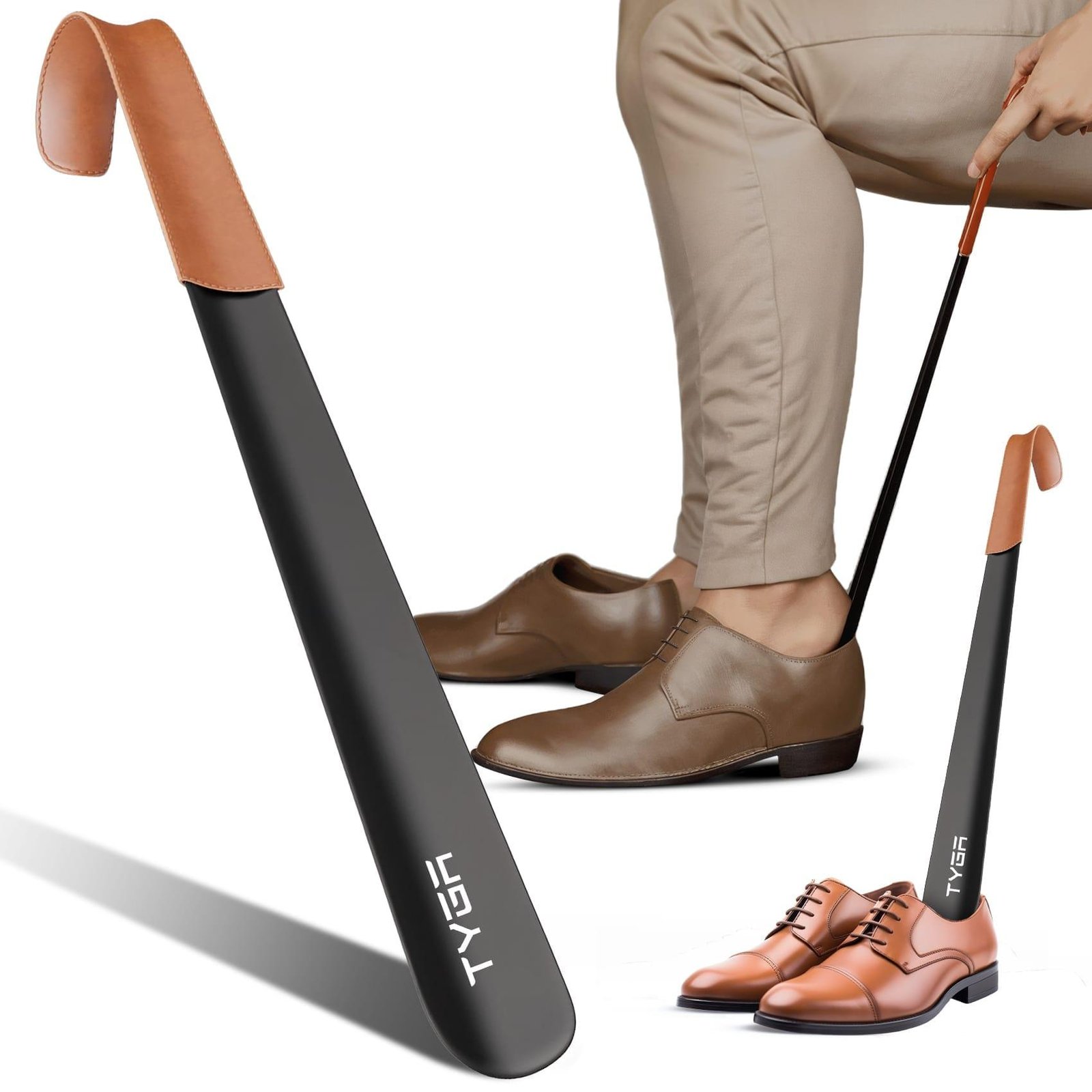
A shoe horn sits behind your heel while you slide your foot into the shoe.
Instead of your heel pushing directly against the back of the footwear, the shoe horn creates a smoother path into the heel area.
This is particularly useful when the rear of the shoe is relatively firm.
A shoe horn can also help you avoid using your fingers to hold the heel section open.
Without a Shoe Horn
The usual process might involve:
Loosening the shoe.
Opening the heel with your fingers.
Sliding your foot forward.
Pushing your heel into place.
Adjusting the shoe afterwards.
This works perfectly well for many people.
With a Shoe Horn
The process is slightly different:
Loosen the shoe appropriately.
Position the shoe horn behind your heel.
Slide your foot into the shoe.
Remove the shoe horn.
Fasten the footwear.
The difference is not dramatic, but it can make the process more convenient, particularly when repeated every day.
The Biggest Difference: Convenience
The strongest argument for using a shoe horn is not that it performs a function you absolutely cannot perform otherwise.
It is that it can make an existing task easier and more consistent.
If you wear formal shoes to work five days a week, for example, you may appreciate having a shoe horn beside your footwear every morning.
If you only wear closed shoes occasionally, the benefit may be much smaller.
This makes a shoe horn a convenience accessory rather than an essential piece of footwear equipment.
Does a Shoe Horn Help Protect Your Shoes?
It can help reduce one type of unnecessary stress on footwear.
Without a shoe horn, some people push down on the back of their shoes to make room for their heel. Repeatedly doing this can affect the shape of the heel area, depending on the footwear's construction.
A shoe horn gives you another way to put the shoe on without intentionally flattening the back.
However, it is important not to overstate the benefit.
A shoe horn will not stop normal shoe wear. Materials naturally crease, soles wear down and footwear eventually needs replacing.
Think of a shoe horn as a small footwear-care habit, not a way to make shoes last indefinitely.
Is It Easier to Put Shoes On With a Shoe Horn?
Often, yes.
The difference is most noticeable when footwear has a firm or structured heel.
Examples include:
Leather dress shoes
Boots
Work shoes
Structured trainers
Certain loafers
Flexible trainers may require much less assistance.
If you can easily slide your foot into your footwear without crushing the heel or reaching awkwardly, a shoe horn may not provide much additional value.
Shoe Horn vs. No Shoe Horn for Older People
The difference can be more significant for someone with limited mobility.
A short shoe horn still requires the user to reach down towards the shoe. A long-handled shoe horn can provide considerably more reach.
This may make it more convenient for someone who finds bending or reaching difficult.
However, individual mobility needs vary. A shoe horn is a simple dressing aid, not a solution for every mobility problem.
If someone has significant difficulty dressing independently, an appropriate professional assessment may be more useful than simply choosing a longer shoe horn.
Short vs. Long Shoe Horns
The choice of length can affect the experience considerably.
Short shoe horns
Best suited to:
Travel
Compact storage
Occasional use
People who have good reach
Long-handled shoe horns
Often more suitable for:
Home use
Boots
Formal footwear
People who want greater reach
People who dislike bending down
A long shoe horn takes up more space, but the extra reach can make it worthwhile.
Shoe Horn vs. No Shoe Horn for Boots
Boots are one situation where a shoe horn can be particularly useful.
The opening and heel area can be deeper than those of many ordinary shoes. A long-handled shoe horn can help guide the heel into place without requiring you to reach as far.
However, the boot should still be loosened properly.
A shoe horn should not be used to force your foot into footwear that is too tight.
If a boot is difficult to put on even when properly loosened, the issue may be the footwear's fit rather than the absence of a shoe horn.
Shoe Horn vs. No Shoe Horn for Formal Shoes
Formal shoes can also benefit from a shoe horn.
Many dress shoes have a structured heel that is not intended to be repeatedly folded down.
Using a shoe horn provides a simple way to guide the heel into the footwear.
For someone who has invested in good-quality formal shoes, a shoe horn is an inexpensive accessory to consider as part of general footwear care.
When Is No Shoe Horn Perfectly Fine?
There is nothing wrong with not using one.
You may not need a shoe horn if:
You mostly wear slip-on shoes.
Your trainers are easy to put on.
You rarely wear structured footwear.
You can comfortably reach your feet.
You already have another suitable method.
You simply prefer putting your shoes on by hand.
A shoe horn is not a requirement for wearing shoes correctly.
It is simply an additional tool.
When Is a Shoe Horn Worth Buying?
A shoe horn becomes more appealing when you repeatedly encounter the same problem.
Consider buying one if:
Your heel regularly gets stuck when entering your shoes.
You repeatedly crush the backs of your shoes.
You wear boots frequently.
You wear formal shoes every day.
You dislike reaching inside your footwear.
You find bending down uncomfortable.
You want a simple dressing aid.
The cost of a basic shoe horn is generally modest, so you do not need to make a major investment to try one.
Can You Use a Shoe Horn With Insoles?
Yes, generally, because the two products have different functions.
A shoe horn helps you put your foot into the footwear.
An insole sits inside the footwear.
This distinction is especially relevant if you are considering products such as TYGA HEIGHT INCREASE INSOLES.
Adding an insole can change the amount of available space inside a shoe, so the overall fit should still be comfortable. A shoe horn can then be used separately to help guide the heel into the footwear.
What About TYGA HEIGHT BOOSTERS?
TYGA HEIGHT BOOSTERS are also different from shoe horns.
A shoe horn is designed to assist with putting on footwear.
A height booster is intended for a different footwear purpose: providing additional height inside suitable footwear.
If your problem is getting your heel into a shoe, a shoe horn is the relevant accessory. If you're interested in increasing height through your footwear, that is a separate consideration.
What About TYGA SHOE INSERTS?
TYGA SHOE INSERTS belong to the in-shoe accessory category.
Like other inserts, they sit inside the footwear, whereas a shoe horn is used during the process of putting the shoe on.
The two can therefore be considered independently.
Common Mistakes When Using a Shoe Horn
A shoe horn is simple to use, but there are still a few things to avoid.
Using it with a badly fitting shoe
A shoe horn should help you enter suitable footwear. It should not be used to force your foot into a shoe that is too small.
Choosing the wrong length
A very short shoe horn may not help much if you bought one to avoid bending down.
Ignoring damaged edges
If a shoe horn becomes cracked, rough or sharp, it should be replaced.
Failing to loosen footwear
Laces, straps and other fastenings should be opened appropriately before putting the shoe on.
Can a Shoe Horn Replace Loosening Your Laces?
No.
A shoe horn and properly loosened footwear work together.
If your laces are excessively tight, the opening of the shoe may remain too narrow regardless of whether you use a shoe horn.
Loosening the footwear first gives your foot enough room to enter. The shoe horn then helps guide the heel into position.
Shoe Horn vs. Household Alternatives
If you do not own a shoe horn, you might be tempted to use a household object.
For occasional emergencies, a smooth, sturdy object may sometimes provide a temporary alternative.
However, there is an obvious advantage to having a dedicated shoe horn: it is designed specifically for the job.
You do not need to search for an appropriate object every time you put on difficult footwear.
For daily use, that convenience can make a dedicated shoe horn worthwhile.
The Real Difference Comes Down to Your Routine
There is no universal winner in the shoe horn vs. no shoe horn debate.
Think about your normal footwear routine.
If you mainly wear trainers:
You may notice little difference.
If you wear formal shoes every day:
A shoe horn may become a useful part of your routine.
If you wear boots:
A long-handled shoe horn can provide useful reach.
If bending is difficult:
A longer model may make the process more convenient.
If you travel frequently:
A short shoe horn may be more practical.
Frequently Asked Questions
Is using a shoe horn better than not using one?
It depends. A shoe horn can make putting on structured footwear easier, but it is not necessary for everyone.
Does a shoe horn make shoes last longer?
It may help reduce unnecessary crushing of the heel area, but it cannot prevent normal footwear wear.
Is a long shoe horn better?
Not automatically. Longer models provide more reach, while shorter models are easier to carry and store.
Are shoe horns useful for elderly people?
They can be useful for people who find bending or reaching difficult. A long-handled model may provide additional convenience.
Can I use a shoe horn with height-increase insoles?
Yes, provided the footwear remains comfortable and appropriately fitted. The shoe horn and insole perform different functions.
Are TYGA HEIGHT INCREASE INSOLES a replacement for a shoe horn?
No. TYGA HEIGHT INCREASE INSOLES sit inside suitable footwear, while a shoe horn helps guide your heel into the shoe.
Final Verdict: Shoe Horn or No Shoe Horn?
The real difference is convenience, reach and how you treat your footwear.
You do not need a shoe horn to put on most shoes. If your footwear is flexible and easy to enter, you may never miss having one.
But if you regularly wear boots, formal shoes or structured footwear, a shoe horn can make the process simpler. A long-handled version can be particularly useful if reaching your feet is uncomfortable.
It can also help you avoid repeatedly crushing the heel of your footwear when putting your shoes on.
Ultimately, there is no reason to buy a shoe horn simply because someone else recommends one. If putting on your shoes is already easy, you probably don't need it. If it is a daily nuisance, a simple shoe horn could be one of the more useful small accessories you add to your footwear routine.





 English
 Arabic
 French
 Spanish
 Portuguese
 Deutsch
 Dutch
Dutch
 Italiano
 Russian
 Romaian
 Portuguese (Brazil)
 Greek
Greek