


How Spray Foam Insulation Improves Indoor Comfort Year-Round
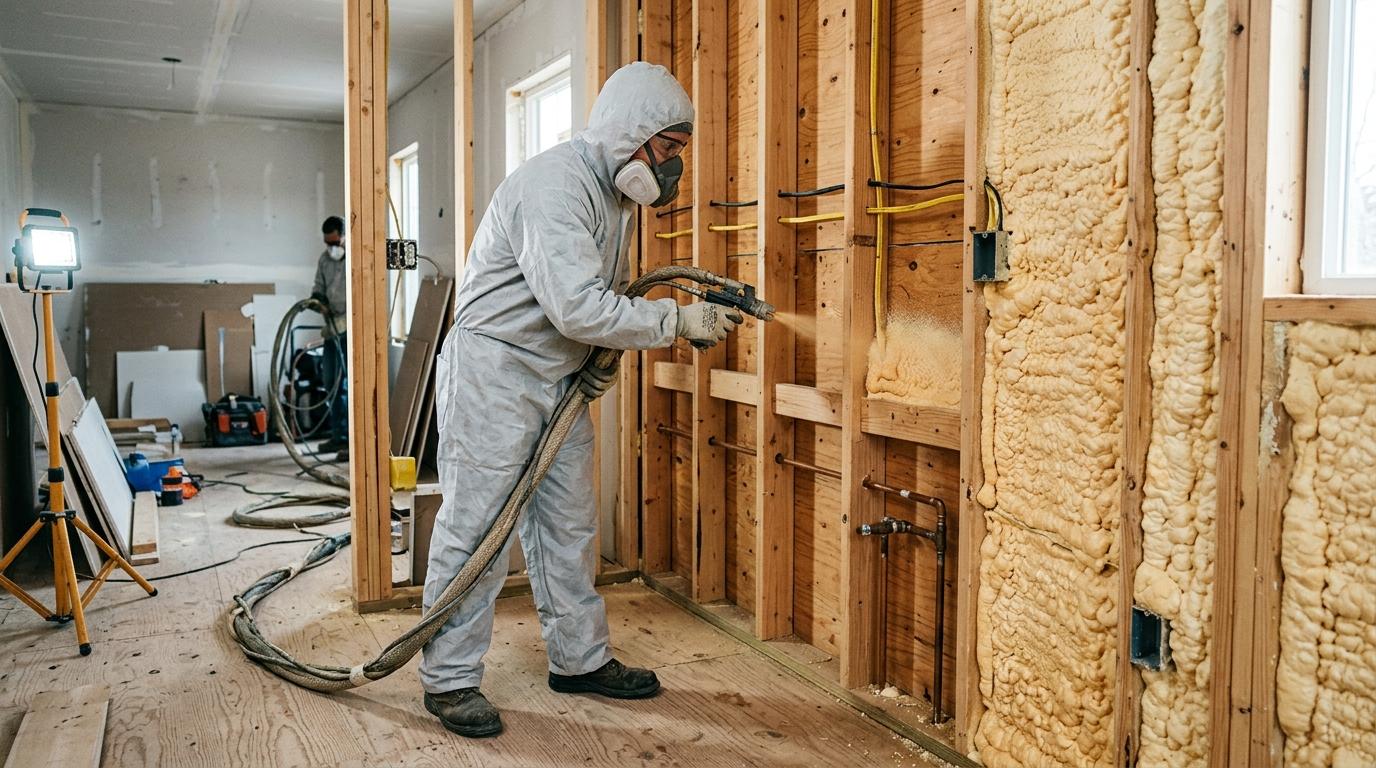
Spray foam insulation improves indoor comfort by reducing air leaks and slowing heat transfer throughout the home. Properly installed spray foam helps maintain more consistent indoor temperatures, minimizes drafts, and reduces the workload on heating and cooling systems during every season.
Comfort inside a home depends on more than the thermostat setting. Even when the heating or cooling system is working properly, some homes still have rooms that feel too hot in summer or too cold during winter. In many cases, the issue isn't the HVAC system it's the building envelope.
Spray foam insulation is designed to reduce heat transfer while limiting unwanted airflow through walls, ceilings, and other structural areas. When installed correctly, it helps create a more stable indoor environment that remains comfortable throughout the year.
Understanding how spray foam works can help homeowners decide whether it fits their home's insulation needs.
Comfort Starts with the Building Envelope
The building envelope includes every part of a home that separates indoor living spaces from outdoor weather.
This includes:
- Exterior walls
- Roof and attic assemblies
- Floors above crawl spaces
- Rim joists
- Windows and doors
- Foundation walls
When these components allow excessive heat or air movement, maintaining comfortable indoor temperatures becomes more difficult.
Insulation is one part of improving the building envelope, while proper air sealing addresses unwanted airflow.
Why Some Rooms Never Feel Comfortable
Many homeowners notice that one or two rooms never seem to match the rest of the house.
Common examples include:
- Upstairs bedrooms that become hot during summer
- Finished basements that remain cold
- Rooms above garages
- Corner bedrooms with exterior walls on two sides
- Bonus rooms built during later home additions
These temperature differences may result from missing insulation, air leakage, poor duct design, or a combination of factors.
A complete evaluation helps determine the actual cause before improvements begin.
Spray Foam Insulation Helps Reduce Air Movement
One advantage of spray foam insulation is its ability to expand after application.
As the material cures, it fills many irregular gaps and spaces that are difficult to insulate with traditional materials.
Reducing uncontrolled air movement can help:
- Eliminate uncomfortable drafts
- Improve temperature consistency
- Reduce outdoor air infiltration
- Support better HVAC performance
The U.S. Department of Energy recommends combining insulation with air sealing to improve residential energy efficiency. U.S. Department of Energy – Air Sealing Your Home
Keeping Homes Comfortable During Winter
During colder months, warm indoor air naturally moves toward colder outdoor temperatures.
Without effective insulation, heat escapes through:
- Exterior walls
- Ceiling assemblies
- Roof structures
- Floor systems
- Foundation connections
Spray foam insulation helps reduce this heat loss, allowing indoor temperatures to remain more consistent while reducing unnecessary heating demand.
Helping Homes Stay Cooler During Summer
Summer presents the opposite challenge.
Outdoor heat attempts to move into conditioned living spaces through roofs, walls, and other building components.
Proper insulation slows this process.
When combined with effective air sealing, spray foam insulation can reduce heat gain that contributes to uncomfortable indoor temperatures.
Although insulation does not produce cool air, it helps preserve the conditioned air created by the HVAC system.
Improved Comfort Doesn't Always Mean Lower Thermostat Settings
Many homeowners assume comfort depends only on thermostat settings.
In reality, indoor comfort is influenced by several factors:
- Surface temperatures
- Air movement
- Humidity
- Heat transfer
- Solar heat gain
- Insulation quality
A room with fewer drafts and more stable wall temperatures often feels more comfortable even if the thermostat setting remains unchanged.
Open-Cell vs. Closed-Cell Spray Foam
Both types of spray foam improve insulation performance, but they have different characteristics.
Open-Cell Spray Foam
Open-cell foam expands significantly and works well in many interior applications where its moisture characteristics are appropriate.
Closed-Cell Spray Foam
Closed-cell foam is denser, provides a higher R-value per inch, and offers greater resistance to water vapor movement.
The best option depends on the construction, available space, and project requirements.
Other Benefits Homeowners Often Notice
Besides improving comfort, properly installed spray foam insulation may also provide:
- Fewer drafts
- More consistent indoor temperatures
- Reduced outside noise infiltration
- Better HVAC efficiency
- Improved energy performance
- Greater comfort in upper floors
Actual results depend on the home's construction and the quality of the installation.
Signs Your Home May Benefit from Spray Foam Insulation
You may want to have your insulation evaluated if you notice:
- Rooms that are difficult to heat or cool
- Drafts near walls or floors
- High heating and cooling bills
- Uneven temperatures between floors
- Cold spots during winter
- Hot ceilings during summer
- Aging or damaged insulation
These issues don't automatically mean spray foam is required, but they often indicate that the building envelope deserves attention.
Why Professional Installation Matters
Even the highest-quality insulation cannot perform as intended if installed incorrectly.
Professional installers evaluate:
- Existing insulation
- Moisture conditions
- Ventilation
- Building materials
- Air leakage
- Application thickness
- Manufacturer recommendations
These factors help ensure the insulation system performs safely and efficiently.
A Comfortable Home Starts with Better Insulation
Indoor comfort isn't created by insulation alone, but insulation plays an important role in how a home performs throughout the year.
By reducing unwanted heat transfer and air leakage, spray foam insulation can help create a more stable indoor environment while supporting the overall efficiency of the building envelope.
If some rooms in your home never seem comfortable regardless of the season, it may be time to evaluate your insulation and air sealing. Homeowners throughout the New York Tri-State area can learn more about spray foam insulation services by visiting AAA Spray Foam Insulation – Spray Foam Insulation.
Does spray foam insulation make a home warmer?
Spray foam insulation doesn't generate heat. Instead, it slows heat transfer and helps retain conditioned indoor air, making it easier to maintain comfortable temperatures during both winter and summer.
Can spray foam insulation reduce drafts?
Yes. Because spray foam expands during installation, it helps seal many gaps and cracks where air commonly leaks, reducing drafts and improving indoor comfort.
Will spray foam insulation improve every room?
Results vary depending on the home's construction, existing insulation, HVAC system, and air leakage. A professional assessment can identify which areas are most likely to benefit from additional insulation.
Is spray foam insulation suitable for older homes?
Many older homes can benefit from spray foam insulation, especially where air leakage is significant. However, moisture conditions, existing insulation, and structural details should be evaluated before installation.
How long does spray foam insulation remain effective?
When properly installed and protected from moisture and physical damage, spray foam insulation can maintain its performance for many years with minimal maintenance.


 Arabic
 French
 Spanish
 Portuguese
 Deutsch
 Turkish
 Dutch
Dutch
 Italiano
 Russian
 Romaian
 Portuguese (Brazil)
 Greek
Greek