


One Eyebrow Sits Lower Than the Other? When Can a Brow Lift Help Improve Facial Symmetry?
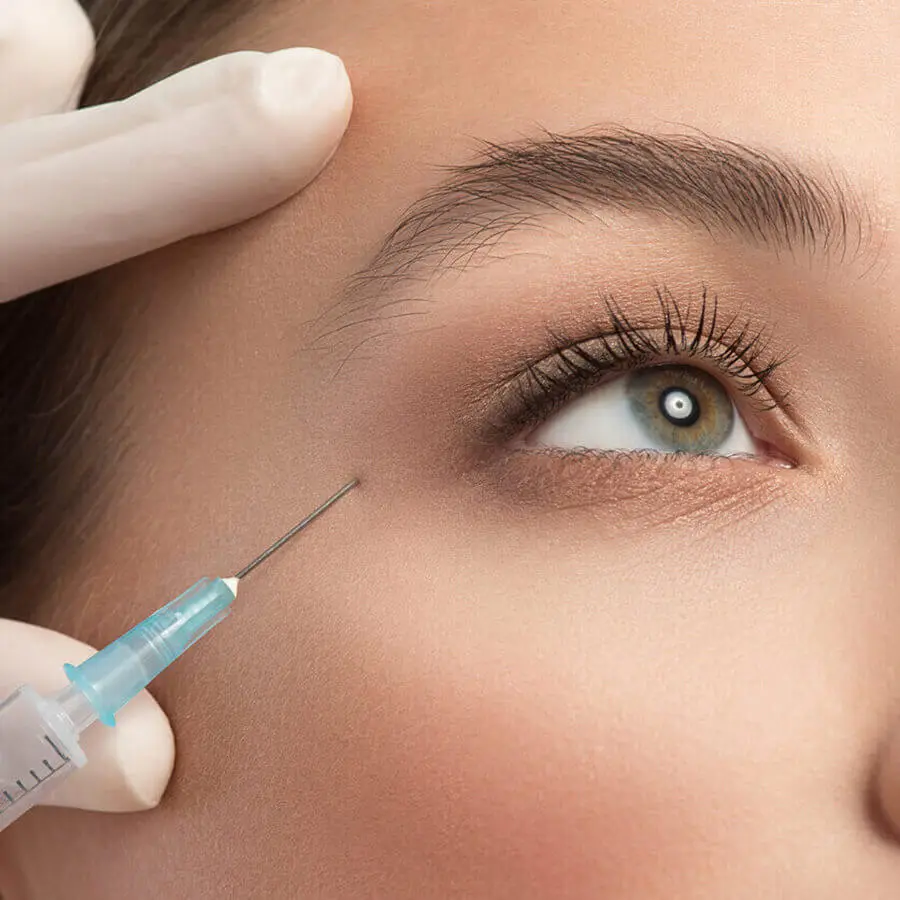
It often starts with a photograph.
You notice that one eyebrow sits a little lower than the other. Then you check another photo. The difference is still there. Soon you are looking in the mirror and wondering whether your eyebrows have always been uneven.
This concern comes up regularly in real patient discussions. People often describe one brow as flatter, lower or less lifted than the other. Some only notice it in photographs. Others feel that the lower eyebrow makes one eye look heavier.
Clinical research confirms that eyebrow asymmetry is common. It also shows that a difference does not need to be large before someone notices it.
For some people, uneven brows are simply part of their natural facial structure. For others, differences in facial muscle activity contribute to the problem. When muscle activity is involved, a non-surgical brow lift may sometimes improve the balance.
The important question is not simply how to raise the lower eyebrow. It is why that eyebrow sits lower in the first place.
Is It Normal for One Eyebrow to Sit Lower?
Yes. Human faces are naturally asymmetric.
The two sides of your face are not exact copies. One cheek may sit slightly higher. Your jawline can be stronger on one side. Even the position of your ears can differ.
Eyebrows follow the same pattern.
The 2018 Facial Plastic Surgery study, “Facial Asymmetry: Brow and Ear Position,” examined 133 patients who were being assessed for blepharoplasty.
Researchers found brow asymmetry in 88% of the patients. Some degree of brow ptosis, which means a lowered or drooping brow, was present in 83%.
Among the patients with eyebrow asymmetry, 61% had the right eyebrow lower. The researchers also found ear asymmetry in 77% of patients. In 73% of the entire group, the eyebrow and ear were lower on the same side.
Those numbers need some context. The study involved people already seeking an assessment around the eyes. It was not a survey of the general Belgian population.
We therefore cannot say that 88% of people in Belgium have uneven eyebrows.
What the research does show is that eyebrow asymmetry is very common among people being assessed for concerns around the eyes. It can also be part of a wider pattern of natural facial asymmetry rather than a problem limited to one eyebrow.
How Uneven Do Eyebrows Need to Be Before You Notice?
Sometimes only a few millimetres are enough.
The Aesthetic Surgery Journal study, “Eyebrow Asymmetry: Definition and Symmetrical Correction Using Botulinum Toxin A,” measured eyebrow height in 683 patients who had requested treatment for facial wrinkles.
Researchers found that 2 mm was the smallest amount of eyebrow asymmetry that patients tended to notice themselves.
Two millimetres sounds tiny.
On a face, however, that small difference can change the amount of visible space between the eyebrow and upper eyelid. One eye may look more open while the other appears slightly heavier.
This can also explain why eyebrow asymmetry sometimes becomes obvious in photographs before you notice it in the mirror.
A photograph freezes the face. It gives you time to compare one side with the other. Once you notice the difference, your eyes naturally keep returning to it.
A visible difference does not automatically mean something is wrong or needs treatment. It simply shows how sensitive we can be to small changes around the eyes.
Why Does One Eyebrow Sit Lower Than the Other?
There is no single reason.
Some people have naturally uneven eyebrows because the underlying facial structure differs slightly from one side to the other.
Muscle activity can also play an important role.
The frontalis muscle helps raise the eyebrows. Other muscles around the eye and between the eyebrows contribute to downward movement. These include parts of the orbicularis oculi and muscles around the glabella.
You can think of eyebrow position as a balance between these upward and downward forces.
If that balance is different on one side, one eyebrow may rest lower or move differently.
For example, one side of the forehead may work harder when you speak. You may unconsciously raise one eyebrow when concentrating. The muscles pulling downward around one eye may also be stronger.
This is why two eyebrows can look almost level when the face is relaxed but become noticeably uneven during expression.
The opposite can happen too. Someone may have a lower eyebrow even when the face is completely relaxed.
Those patterns do not necessarily have the same cause.
Can Age Make One Brow Look Lower?
Age can make an existing difference easier to see.
A person may have had mild brow asymmetry since childhood without ever thinking about it.
Over time, the skin and supporting tissues around the forehead and eyes change. Brow position can shift. The upper eyelid can also begin to look heavier.
Muscle habits may make the difference more noticeable.
Some people use the frontalis muscle to compensate for heaviness around an eyebrow or eyelid. They unconsciously raise that side of the forehead to keep the eye area looking more open.
That can create different movement patterns between the two sides.
Looking at older photographs can sometimes be surprisingly useful. If the lower brow was already visible ten years ago, natural anatomy is more likely to be involved. If the change is genuinely new, it deserves closer assessment.
Why Can a Lower Eyebrow Make One Eye Look Smaller?
Sometimes the apparent eye problem actually starts above the eye.
When an eyebrow sits lower, there is less space between the brow and upper eyelid. The surrounding tissue can therefore appear heavier.
This can make one eye look smaller, more hooded or more tired.
A person may naturally assume that the eyelid is responsible.
Research has highlighted this problem for years. The “Eyebrow Asymmetry: Ways of Correction” study explained that some patients seeking correction of apparently asymmetric eyelids actually had underlying eyebrow asymmetry. The researchers stressed the importance of analysing the individual cause before selecting treatment.
This distinction matters because changing brow muscle activity cannot fix every eyelid problem.
The eyebrow and eyelid need to be considered together.
When Can a Brow Lift Help With Uneven Eyebrows?
A non-surgical browlift may help when muscle activity contributes to the lower eyebrow and the amount of correction needed is relatively small.
The basic principle is easier to understand than it sounds.
Some facial muscles lift the eyebrow. Others pull it downward.
If selected downward-pulling muscles are carefully relaxed, their influence becomes weaker. The muscles responsible for elevation may then have relatively more influence on the brow position.
This can produce a subtle lift.
The word subtle is important.
An injectable brow lift does not physically reposition the forehead in the way surgery can. It changes muscle activity. The amount of movement is therefore limited.
That can still be useful when one outer brow sits only slightly lower.
A difference of a few millimetres can be visible around the eyes, so a small change may sometimes improve the overall balance without dramatically changing the face.
What Does the Research Say About Brow Elevation?
Several studies have measured what happens to eyebrow height after botulinum toxin treatment.
One of the most useful is the “Temporal Brow Lift Using Botulinum Toxin A” study, published in Plastic and Reconstructive Surgery.
The study included 22 patients. Researchers treated selected brow depressor muscles and measured eyebrow position two weeks later.
Average elevation measured from the mid-pupil was 1.02 mm. Near the outer corner of the eye, the average elevation was 4.83 mm.
This does not mean everyone receiving treatment will get a 4.83 mm lift.
The measurement point matters. The outer brow can respond differently from the central part of the eyebrow. Anatomy, muscle activity and treatment technique can also affect the outcome.
A broader picture comes from the systematic review “Botulinum Toxin for Eyebrow Shaping.”
Researchers reviewed 11 studies involving 585 patients. Across those studies, the greatest elevation was generally seen in the lateral, or outer, brow. Reported elevation there ranged from 0.4 to 4.8 mm.
The authors also noted that there was no single standardised method for eyebrow shaping and called for further randomised controlled trials.
That is a useful context. The evidence supports the possibility of brow elevation, but it does not support promising a fixed number of millimetres to every person.
Can Treatment Improve the Difference Between Two Eyebrows?
Research suggests that it can in selected patients.
The Aesthetic Surgery Journal eyebrow asymmetry study treated 115 patients whose eyebrow heights differed by more than 2 mm.
People with certain causes of asymmetry, including facial palsy, trauma and previous surgery around the eyes, were excluded.
After treatment, the difference between the right and left eyebrow heights decreased significantly.
Researchers defined a successful result as having only 0 or 1 mm of remaining asymmetry.
That result was achieved by 83 of the 115 patients, or 72.1%.
This is one of the strongest numbers available for the specific question of eyebrow symmetry.
It still needs to be interpreted carefully.
It does not mean every person has a 72.1% chance of ending up with nearly level eyebrows. These were selected patients treated under specific study conditions.
It also means 32 patients did not reach the study's definition of success.
The useful conclusion is that muscle-relaxing treatment can improve measurable eyebrow asymmetry for some suitable patients. It cannot guarantee perfect symmetry.
How Can You Tell If Muscles Are Causing the Difference?
Watching how your eyebrows move can provide useful clues.
Start by looking in the mirror with your face completely relaxed.
Notice whether one eyebrow already sits lower.
Then slowly raise both eyebrows. Watch whether they move by roughly the same amount or whether one side rises much higher.
Next, frown gently and relax again.
If the difference changes noticeably with facial expression, muscle activity may be contributing to the asymmetry.
That does not tell you which muscle should be treated.
A proper assessment needs to consider the forehead, eyebrows and eyelids together. Brow position should be observed both at rest and during movement.
Hours of research can help you understand the anatomy and prepare sensible questions. It cannot show exactly how your own muscles are interacting beneath the skin.
That is one reason individual assessment matters when the goal is better symmetry.
Why Is It Not as Simple as Treating the Lower Side More?
It is tempting to think that a lower eyebrow simply needs more treatment.
Research suggests the situation is more complicated.
A 2015 Dermatologic Surgery study examined 23 women with eyebrow-height asymmetry. Researchers tested whether injecting botulinum toxin more deeply on the side where greater elevation was wanted would create a better correction.
After four weeks, there was no significant difference in brow-height change between the deeply injected and shallowly injected sides.
The researchers concluded that different injection depths did not provide an effective way to correct eyebrow-height differences.
That finding helps explain why brow symmetry cannot be managed with a simple “more treatment on this side” rule.
Muscle strength, injection location, diffusion and the way the whole forehead moves all matter.
When Is a Brow Lift Less Likely to Help?
A muscle-relaxing brow lift has limits because not every low eyebrow is mainly caused by muscle activity.
Significant excess skin is one example. Changing muscle activity cannot remove loose skin.
The same applies to structural facial differences. An injectable treatment cannot alter the underlying facial bones.
True eyelid ptosis also needs to be distinguished from a low eyebrow. The two can create a similar heavy appearance, but they involve different structures.
There is one more situation that deserves particular attention.
If one eyebrow has always been lower, natural asymmetry may be the explanation. If the brow suddenly drops or the change is accompanied by new facial weakness, speech difficulty, vision changes or other neurological symptoms, medical assessment should come before any cosmetic treatment.
A new facial change should never automatically be treated as an aesthetic problem.
Can a Brow Lift Make the Eyebrows More Uneven?
Yes. It is possible.
Changing muscle activity means changing the forces controlling eyebrow position.
If the two sides respond differently, one eyebrow may temporarily sit higher than the other.
The outer part of an eyebrow can sometimes become excessively elevated. This appearance is often called a “Spock brow” or “Mephisto brow.”
A brow can also become lower if the muscles responsible for elevation are weakened too much.
The systematic review of 11 studies and 585 patients found bruising and headache among the most frequently reported complications. It also recorded 5 cases of eyelid ptosis across the included studies.
That does not tell us the exact risk for an individual patient because the studies used different treatment approaches. It does confirm why potential unwanted effects need to be discussed rather than presenting the procedure as risk-free.
What Should Belgian Readers Know Before Considering Treatment?
The medical principles behind eyebrow asymmetry are not unique to Belgium. The clinical studies discussed above come from international research.
Belgium does, however, have its own rules surrounding aesthetic medicine and how these treatments are presented to the public.
The Belgian Federal Public Service Health states that professional information about aesthetic medical procedures must be truthful, objective, relevant, verifiable, discreet and clear. It must not be misleading or encourage unnecessary treatment.
Belgian rules also distinguish professional information from advertising intended to recruit patients for aesthetic procedures.
That distinction fits particularly well with eyebrow asymmetry.
Having one eyebrow slightly lower is common. It does not mean that treatment is medically necessary. The decision should depend on the cause of the asymmetry, how much it bothers the person and whether the expected improvement is realistic.
The numbers from international studies should also not be presented as Belgian population statistics. There is no basis for saying that 88% of Belgian people have uneven eyebrows simply because one selected clinical study reported that figure.
Accurate information requires keeping that difference clear.
Better Facial Symmetry Starts With Understanding the Lower Brow
One eyebrow sitting lower than the other is often a normal part of facial asymmetry.
Research shows that differences can be surprisingly small and still noticeable. In one study of 683 patients, 2 mm was enough for people to begin recognising their own eyebrow asymmetry.
Research also shows that selected muscle-relaxing treatment can change eyebrow height. A systematic review covering 585 patients across 11 studies found the greatest elevation in the outer brow, with reported changes ranging from 0.4 to 4.8 mm.
For people who already had more than 2 mm of eyebrow asymmetry, another study found that 72.1% of 115 selected patients reached only 0 or 1 mm of remaining difference after treatment.
Those findings support a careful conclusion, not a promise.
A brow lift can make sense when muscle activity is an important reason one eyebrow sits lower and the desired correction is subtle. It is less likely to solve a problem caused mainly by excess skin, eyelid ptosis or deeper structural differences.
Perfect symmetry should not be the target either.
The face is naturally asymmetric. The more realistic goal is to understand why one eyebrow sits lower and whether a small change in muscle balance could make the upper face look more even without taking away its natural expression.
When the cause is understood first, the decision about whether a brow lift can genuinely help becomes much clearer.

 Arabic
 French
 Spanish
 Portuguese
 Deutsch
 Turkish
 Dutch
Dutch
 Italiano
 Russian
 Romaian
 Portuguese (Brazil)
 Greek
Greek