


The Adaptive Factory: Meeting Regional Specifications
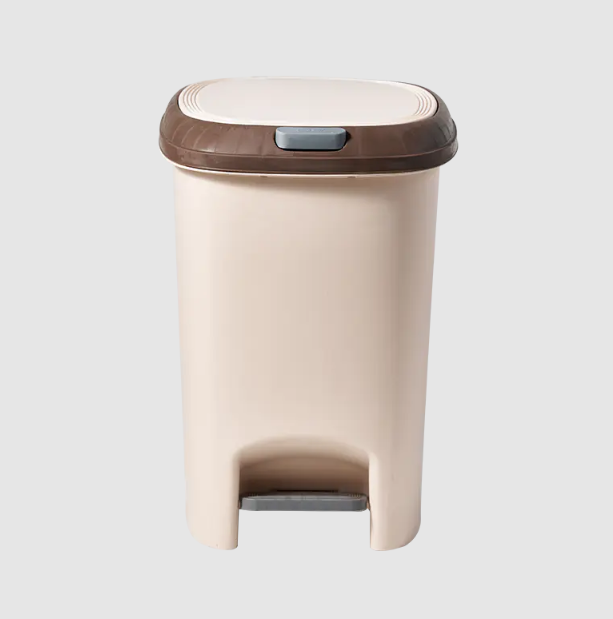
The Global Bin: Engineering Products for Localized Needs
A trash can is often viewed as a simple, utilitarian object. However, on the factory floors of leading Chinese manufacturers, it is a complex product of cultural, regulatory, and logistical engineering. To successfully serve a global clientele—from municipalities in Germany to national parks in Canada and supermarkets in Japan—a plastic trash can manufacturer in China must function as a master adapter. Their design and production processes are built not on a one-size-fits-all model, but on a flexible platform capable of rapid customization to meet highly specific regional demands, turning a commodity into a tailored solution.
Decoding Regional Regulations and Behavioral Norms
The first step is a deep analysis of the target market's "unwritten specifications." For European markets, especially DACH countries (Germany, Austria, Switzerland) and Scandinavia, there is a strong preference for pedal-operated bins with tight-sealing lids for indoor kitchen use. This drives design focus towards robust pedal linkage mechanisms made from steel, smooth-close hinges to prevent slam noise, and lids with integrated silicone gaskets to contain odors—features less prioritized in other regions. Conversely, for North American markets, particularly in suburban and park settings, animal-resistant designs are critical. Manufacturers develop specialized lid-latching systems that require a specific sequence of motions (press, turn, lift) too complex for raccoons or bears, using reinforced materials and secure metal fasteners at stress points. In Asian urban markets like Japan or Singapore, where space is at a premium, the emphasis shifts to compact, stackable designs with aesthetic, minimalist forms that blend into small apartments or high-end offices.
Designing for Supply Chain and In-Use Logistics
A product's journey from factory to curb is as important as its end use. Manufacturers must engineer for two distinct logistical phases:
Ocean Freight Efficiency: For overseas clients, the cost of shipping air is prohibitive. Therefore, designs prioritize nestability (one bin fitting inside another) or knock-down (KD) assembly. A KD bin ships as separate lid, body, and hardware in a flat carton, slashing shipping volume by up to 70%. This requires brilliant design of snap-fit or tool-free assembly connections that remain sturdy after repeated use.
Municipal Handling: For large municipal orders, bins must be compatible with automated lifters on garbage trucks. This necessitates precise reinforcement ribs and ledge geometries that match the truck's grabbing arm. Wheels must be large enough for rough terrain, with axles designed to withstand lateral impacts from curbs. The placement of handles and the overall weight when full are calculated for ergonomic manual handling by sanitation workers.
The Agile Manufacturing Platform: Modular Molds and Material Science
Responding to these diverse needs requires an agile production system. Top manufacturers utilize modular mold technology. A base mold for a standard 120-liter wheeled bin can be quickly fitted with different inserts to create: a standard dome lid, a flat lid with a metal-reinforced latch for animal resistance, or a hole for a pedal mechanism. This allows for small-batch customization without the cost of a completely new mold.
Material formulation is equally adaptable. For bins destined for the scorching, high-UV Australian outback, the HDPE masterbatch is heavily fortified with UV stabilizers and pigments. For cold Scandinavian climates, the blend is adjusted for impact resistance at sub-zero temperatures. For eco-conscious European buyers, factories can switch to compounds containing a high percentage of post-consumer recycled (PCR) material, though this is clearly communicated as it may affect color consistency and weight tolerance.
Thus, a leading plastic trash can manufacturer in China operates as a global design and logistics hub. Their core competency is not merely plastic molding, but the ability to translate geographic, cultural, and regulatory nuances into practical, durable, and cost-effective physical products. By mastering this art of adaptive engineering, they become an indispensable partner for clients worldwide, providing not just containers, but optimized waste management solutions for every corner of the globe.



 English
 Arabic
 Français
 Español
 Português
 Deutsch
 Türkçe
 Dutch
Dutch
 Italiano
 Russian
 Romaian
 Portuguese (Brazil)