


XPS Foam Board: The Future of Energy-Efficient Insulation for Modern Buildings
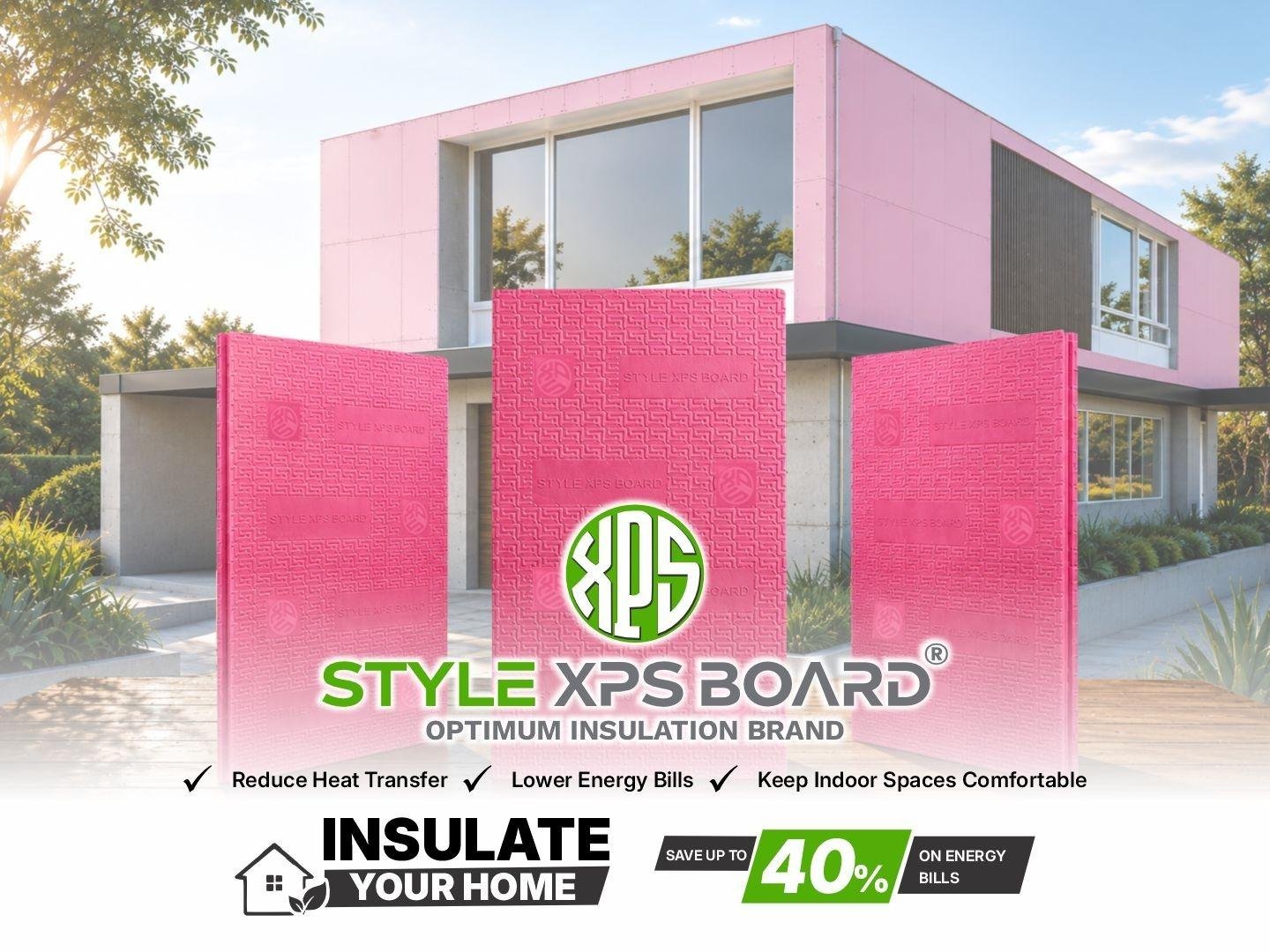
Modern buildings are expected to deliver more than strength and attractive design. They must also provide thermal comfort, reduce energy consumption, manage moisture, and support long-term performance. As energy efficiency becomes an increasingly important part of construction, insulation has become a critical component of the building envelope. Among the available rigid insulation materials, XPS Foam Board has become a popular choice for walls, roofs, floors, foundations, and other applications where thermal performance and moisture resistance are important.
What Is XPS Foam Board?
XPS Foam Board is a rigid insulation material made by extruding polystyrene into a continuous foam board. During manufacturing, the polymer is mixed with additives and a blowing agent, expanded, and formed into boards with a relatively uniform closed-cell structure.The closed-cell construction is one of the key reasons XPS performs well in demanding building applications. Compared with many traditional insulation materials, it has relatively low moisture vapor permeability and can maintain useful thermal performance in applications where exposure to moisture is a concern. DOE building guidance lists XPS at approximately R-5 per inch as a typical reference value, although actual performance varies by product, thickness, temperature, and installation conditions.
How Is XPS Foam Board Manufactured?
The manufacturing process plays an important role in the performance of XPS insulation. Polystyrene resin is processed and combined with other ingredients before being extruded through specialized equipment. A blowing agent creates the cellular structure as the material expands.The foam is then shaped into a continuous board and passed through cooling and sizing stages. After the board reaches the required dimensions and stability, it can be cut into standard sizes or customized according to project requirements.
Why Is XPS Foam Board Important for Energy-Efficient Buildings?
Heat naturally moves from warmer areas toward cooler areas. Without adequate insulation, heat can escape through walls, roofs, floors, and foundations during winter and enter the building during hot weather.XPS Foam Board creates a thermal barrier that slows this heat transfer. This can help buildings maintain more stable indoor temperatures and reduce the workload placed on heating and cooling systems.
Disadvantages and Limitations of XPS Foam Board
Despite its strong performance, XPS Foam Board has some limitations.
Higher Initial Cost in Some Applications
Depending on the market and product specification, XPS can cost more than some alternative insulation materials. The initial price should therefore be compared with expected energy performance, installation requirements, and service life.
Combustibility
Like other plastic foam insulation products, XPS can burn and must be used in accordance with applicable fire-safety requirements. Protective layers may be necessary in interior applications.
Conclusion
XPS Foam Board is an important insulation solution for modern energy-efficient construction because it combines thermal resistance, moisture resistance, rigidity, and versatility. From exterior walls and roofs to foundations, floors, and slabs, it can help create a more continuous and effective thermal envelope.
Its ability to reduce heat transfer and address thermal bridging makes it particularly relevant as buildings move toward higher energy-efficiency standards. At the same time, proper installation, fire protection, moisture management, product selection, and compliance with building codes are essential for achieving reliable long-term performance.


 English
 Arabic
 French
 Spanish
 Deutsch
 Turkish
 Dutch
Dutch
 Italiano
 Russian
 Romaian
 Portuguese (Brazil)
 Greek
Greek