Common Hoop Problems Beginners Can Avoid Before Their First Stitch
An embroidery design can be correctly digitized and still look uneven when the fabric moves during stitching. Sometimes the problem starts before the machine runs: the hoop is too loose, the material is stretched, or the chosen hoop does not fit the project.
Learning to select and use the right hoop can prevent many frustrating results.
Signs That Your Fabric Is Not Hooped Properly
Check your fabric before starting the machine. A few common problems include:
Loose fabric: The material shifts while the machine stitches.
Excessive stretching: The fabric looks distorted inside the hoop and may shrink back after removal.
Uneven placement: The design sits at an angle or in the wrong position.
Poor stabilization: Lightweight fabric moves or puckers around the embroidery.
A hoop should hold the fabric securely without pulling it out of its natural shape.
Standard Hoops Require Careful Placement
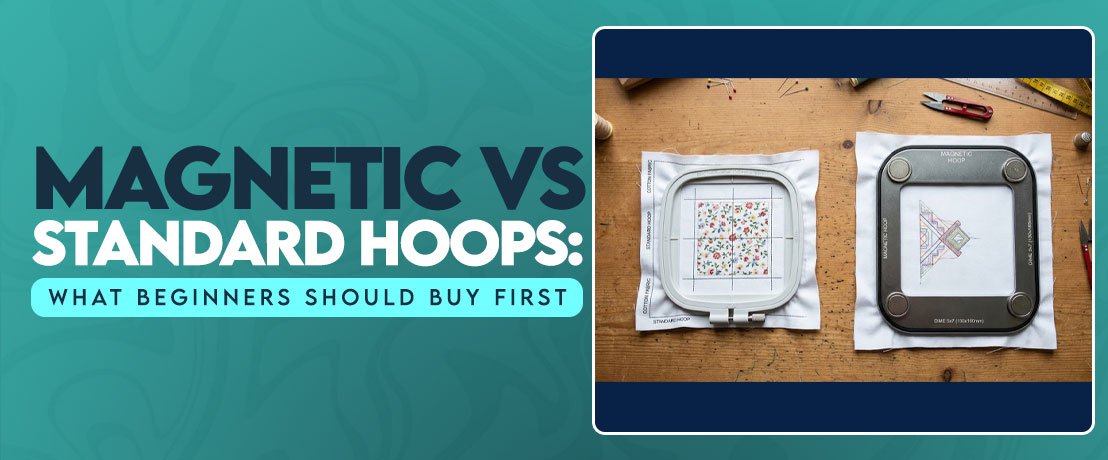
Traditional hoops are useful for everyday embroidery, but beginners need practice positioning the fabric evenly between the inner and outer rings.
After tightening the hoop, check the material for wrinkles. Do not pull the fabric excessively to make it look smooth. The stabilizer should support the fabric according to the requirements of the design.
Can Magnetic Hoops Solve These Problems?
Magnetic hoops can make fabric loading easier, particularly with thick or bulky items. They may also reduce the need to force a garment into a tight inner ring.
However, they do not fix every embroidery problem. Incorrect stabilizer, unsuitable thread tension, poor digitizing, and excessive design density can still cause puckering or distortion.
If you are comparing a beginner embroidery machine, check which hoop sizes come with it and whether compatible magnetic options are available. The included equipment may be sufficient for learning and completing small projects.
Which Hoop Is Best for Your First Projects?
Choose a standard hoop if you mainly work with ordinary fabrics and want to keep costs down. Consider a magnetic hoop if thick garments or frequent hoop changes make your current process difficult.
Before purchasing, confirm the exact machine compatibility and supported embroidery area.
Build Good Habits Before Upgrading
Practice hooping on scrap fabric before working on a finished garment. Run a sample design, remove the hoop carefully, and inspect the result.
If the fabric puckers or the design shifts, investigate the cause instead of immediately buying another accessory. Correct hooping and stabilization will help you get better results with either hoop type.
https://www.adziohub.com/myblog/753-magnetic-vs-standard-hoops-what-beginners-should-buy-first
48 Views