


Worried About an Unnatural Hairline? How to Evaluate Hair Clinics in Dubai Before Booking a Consultation
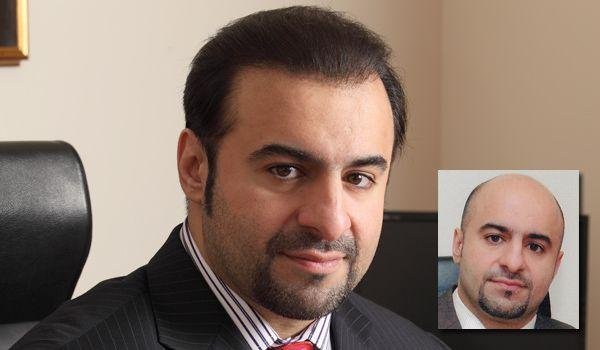
In March 2026, a Dubai resident shared his experience of searching for a hair transplant clinic after spending a week visiting around seven clinics in Dubai. He had already looked at clinics online, but the consultations gave him a much clearer idea of how differently each clinic approached hairline design and treatment planning.
Some consultations were detailed and gave him time to ask questions about his hairline, donor area, and possible results. One of them reportedly lasted more than an hour, while others felt much shorter and less thorough. His experience was personal rather than medical research, but it highlights something important for anyone worried about ending up with an unnatural-looking hairline: the consultation often tells you far more than a clinic's social media page.
A hair transplant changes one of the most visible parts of your appearance, and poor planning can be difficult to correct later because donor hair is limited. For that reason, comparing hair clinics in dubai should involve more than checking prices, promotional offers, or a few dramatic before-and-after photos. You need to understand who will treat you, how your hairline will be designed, how your donor area will be used, and what may happen if your natural hair continues to thin.
Why Some Hairlines Look Unnatural After a Transplant
A natural hairline is rarely perfectly straight or completely even. If you look closely at someone who has never experienced significant hair loss, you will usually notice small changes in height, density, spacing, and direction across the front. The temples may sit differently from the centre, while finer hairs often appear near the edge.
A transplanted hairline can look unnatural when these details are ignored. Problems may appear when the line is placed too low, designed too straight, packed too heavily at the front, or created without considering the patient's age and facial proportions.
Age is especially important because hair loss can continue after surgery. A very low hairline may look attractive at 25, but if the natural hair behind it continues to recede, the result may look less balanced later in life. This is why good hairline planning should consider both the present appearance and the likely pattern of future hair loss.
The International Society of Hair Restoration Surgery 2025 Practice Census gives useful context here. It found that 57.6% of responding members said their first-time surgical patients were mainly aged 26 to 35, while another 37.3% reported the 20 to 25 age group. The ISHRS summarised these findings by stating that 95% of first-time surgical patients treated by respondents in 2024 began surgery between ages 20 and 35.
That age profile matters because younger patients may have many years of further hair loss ahead of them. A natural-looking result therefore depends on planning a hairline that still makes sense as the person gets older.
Check Whether the Clinic and Medical Team Are Properly Licensed
Before discussing graft numbers or hairline shape, it makes sense to check whether the clinic and medical team are properly authorised to provide hair transplant services.
The Dubai Health Authority, or DHA, has formal standards for hair transplantation. Standards for Hair Transplant Services, Version 3 was issued on 11 July 2023 and became effective on 11 September 2023. These standards apply to relevant healthcare facilities and professionals operating under DHA jurisdiction.
The UAE has also introduced wider national requirements. The Ministry of Health and Prevention adopted Ministerial Decree No. 52 of 2025, which sets national standards for hair transplant services in licensed healthcare facilities.
These regulations matter because a hair transplant is a medical procedure, not a salon treatment. Before moving forward, ask who is medically responsible for your case and whether that professional is properly licensed. It is also reasonable to ask whether the facility is authorised to provide hair transplant services.
A serious clinic should be able to answer these questions clearly without making you feel uncomfortable asking them.
Find Out Who Will Actually Design Your Hairline
One of the most important things to clarify during a consultation is who will actually design your hairline and who will perform the key stages of the procedure.
Hair transplant clinics may work with doctors, nurses, technicians, coordinators, and other support staff. Team-based care is normal, but you should still know who is responsible for each part of your treatment. The person you meet during the first consultation may not necessarily perform every stage of the transplant.
Ask who will assess your hair loss and examine the donor area. Then ask who will decide the position and shape of the hairline and who will perform or supervise the surgical steps.
The DHA Standards for Hair Transplant Services state that a physician should perform only one hair transplant procedure at a time. The same standards also include requirements related to training, professional competence, and the roles of healthcare workers involved in hair transplantation.
This gives you a useful question to take into the consultation: How many patients will my doctor be responsible for while my procedure is taking place? The answer should be direct and easy to understand.
Ask Why the Proposed Hairline Suits Your Face
During a consultation, the doctor may draw a proposed hairline across your forehead. It can be tempting to look in the mirror for a few seconds and decide whether you like it, but there is more to consider than appearance at that moment.
Ask why the hairline starts at that particular height and why the temples have been shaped in a certain way. The doctor should also be able to explain how the design fits your age, facial proportions, existing hair, donor supply, and possible future hair loss.
A well-planned hairline is not simply the lowest line that can be created. It should look believable on your face and remain practical from a donor-management point of view.
If you notice that most patients in a clinic's portfolio have almost identical straight hairlines, it is worth asking why. Hairline design should be personalised because faces, ages, hair types, and patterns of hair loss are different.
Make Sure the Donor Area Is Properly Assessed
Many patients naturally focus on the front of the scalp because that is the area they want to improve. However, a good consultation should pay just as much attention to the donor area at the back and sides of the head.
Hair transplantation does not create new follicles. It moves suitable follicles from one part of the scalp to another, which means the donor supply is limited and has to be used carefully.
The Dubai Health Authority states that the maximum number of grafts that can safely be harvested depends on several factors. These include the safe donor area, donor density, head size, surgical technique, donor skin properties, patient age, and the possible need for future procedures.
This is why a very high graft estimate should not automatically be viewed as a positive sign. If too many grafts are removed during the first procedure, the donor area may become weaker and future options may be reduced.
A good treatment plan should therefore improve the current problem while still protecting enough donor hair for the future.
Do Not Judge Clinics Only by Graft Numbers
After hours of research, many people start comparing clinics mainly by graft count. One clinic may recommend 2,500 grafts, another may suggest 3,200, and a third may offer a much higher number.
That can make the largest estimate look like the best value, but graft numbers only make sense when they are linked to the patient's actual needs.
Ask the doctor how the estimate was calculated. A useful answer should explain how the size of the thinning area, donor density, existing hair, hair characteristics, expected coverage, and possible future loss were taken into account.
It is also worth asking how much donor supply may remain after the proposed procedure. That question helps you understand whether the clinic is thinking only about the first transplant or also about the years ahead.
The graft count should come from the treatment plan, not from a package designed to sound more attractive.
Study Before-and-After Photos More Carefully
Before-and-after photographs can help you compare clinics, but only if you look beyond the overall transformation.
Start by studying the hairline itself. Does it look too straight, or does it have the softer variation you would expect from natural hair? Does the position suit the patient's forehead and age? Does the density at the front blend with the hair behind it?
You should also try to find cases that are similar to your own. Someone with thick, dark, curly hair may achieve a different visual result from someone with fine, straight hair. Hair calibre, curl, colour contrast with the scalp, donor density, and the extent of hair loss can all influence how much coverage appears possible.
Ask when the after-photo was taken as well. Hair transplant growth develops over time, so a photo taken after a few months should not be judged in the same way as one taken after a year or longer.
Independent patient communities can also help you identify useful questions and possible concerns, but those posts should be treated as personal experiences rather than clinical evidence.
Do Not Choose FUE, FUT, or DHI Based on Marketing Alone
Hair transplant terminology can quickly become confusing, especially when clinics present one technique as clearly superior to everything else.
You may see terms such as FUE, FUT, DHI, implanter pens, and different blade types used heavily in marketing. The UAE Ministry of Health and Prevention's 2025 national standards include recognised approaches such as Follicular Unit Transplantation, Follicular Unit Excision, and Direct Hair Implantation.
Instead of asking which technique is newest, ask why a particular method has been recommended for you.
Different approaches involve different considerations related to harvesting, implantation, donor management, scarring, and recovery. No technique guarantees a natural-looking hairline on its own.
A poorly planned FUE procedure can still produce an unnatural result, just as any other technique can if the design and placement are weak. The doctor's judgment, the hairline plan, graft direction, and donor management matter just as much as the name of the method.
Ask What Happens If Your Hair Loss Continues
A consultation should not focus only on the hair you have lost today. You should also ask what may happen if the natural hair behind the transplant continues to thin.
This question is especially important for younger patients because hair loss can progress for many years.
The ISHRS 2025 Practice Census found that 73% of responding members used a cut-off age when considering surgery for young patients. Among those respondents, the average minimum age was 22, while the median was 23.
This does not mean that everyone below a certain age is unsuitable for treatment. It shows that age and future hair-loss progression are serious planning factors for many professionals working in hair restoration.
Depending on your situation, the doctor may discuss monitoring, medical treatment, a more conservative hairline, or the possibility of future procedures.
If the conversation focuses only on how much hair can be transplanted today and does not address what may happen later, it is worth asking more questions.
Be Careful With Strong Promises
Hair transplantation is a medical procedure, so realistic expectations matter.
Be cautious if a clinic promises a perfect result, guaranteed density, or 100% success. Hair restoration involves healing, individual biology, donor limitations, and the possibility of complications.
The UAE national hair transplant standards identify possible complications that can include bleeding, infection, delayed healing, scarring, donor depletion, swelling, pain, and failure of hair growth.
The DHA Standards for Hair Transplant Services also require informed consent and discussion of benefits, risks, complications, and alternatives before treatment.
Hearing a doctor talk honestly about risks should not automatically make you lose confidence. In many cases, a clear explanation of possible limitations is more reassuring than a consultation that only talks about positive outcomes.
Ask what happens if you have a problem after surgery. You should know who provides follow-up care and how the clinic handles concerns during recovery.
Compare Consultations Before Comparing Prices
Price is important, but it should not be the first thing you compare.
The Dubai resident who reported visiting around seven clinics found that the consultations differed in depth, communication, and recommendations. That experience does not mean everyone needs to visit seven clinics, but it does show why a second or third opinion can be useful.
When you compare consultations, take the same questions with you each time. Look at how the proposed hairline changes from one doctor to another. Compare the graft estimate and notice how carefully the donor area is examined.
You should also pay attention to how well the doctor listens. If your main priority is a natural-looking result, that concern should shape the discussion rather than being treated as a minor preference.
A lower price may save money at the start, but poor planning can be much harder and more expensive to correct later.
Questions Worth Taking to Your Consultation
It helps to write down a few questions before your appointment because consultations often involve a lot of new information.
-
Who will design my hairline? Ask why the height and shape suit your age, face, donor supply, and expected future hair loss.
-
Who will perform each stage of the procedure? You should understand what the doctor will do and what other trained team members will handle.
-
How did you calculate my graft estimate? The explanation should be linked to your donor area and actual coverage needs.
-
What happens if my natural hair keeps thinning? This helps you see whether the clinic has considered your long-term appearance.
-
Can I see patients similar to me? Look for comparable hair type, age, donor characteristics, and degree of hair loss.
-
What risks should I understand? A proper consultation should explain limitations as well as benefits.
-
What follow-up care will I receive? Ask who you contact after surgery and what support is available during recovery.
These are normal questions for a medical procedure. Asking them does not make it difficult. It helps you understand a decision that could affect your appearance for many years.
Choose a Hairline That Still Looks Natural Years Later
The best hair transplant plan is not the one with the lowest hairline, the largest graft number, or the cheapest package. It is the one that makes sense for your face, donor supply, current hair loss, and likely future changes.
Dubai has formal DHA hair transplant standards, while the UAE adopted national standards through Ministerial Decree No. 52 of 2025. These rules provide an important framework, but your own questions still matter.
Before making a decision, check who will treat you and ask how the proposed hairline was designed. Make sure the donor area is properly assessed and understand how the graft estimate was calculated. Look at results from patients who are actually similar to you, and ask what could happen if your natural hair continues to thin.
Most importantly, do not allow a limited-time offer or sales pressure to rush the decision.
A well-planned hairline should not make people notice that you had a transplant. It should fit your face naturally enough that the result simply looks like it belongs there.


 English
 Arabic
 French
 Spanish
 Portuguese
 Deutsch
 Turkish
 Dutch
Dutch
 Italiano
 Russian
 Romaian
 Portuguese (Brazil)